
Why Conversational AI Platforms Are the Future of Engagement
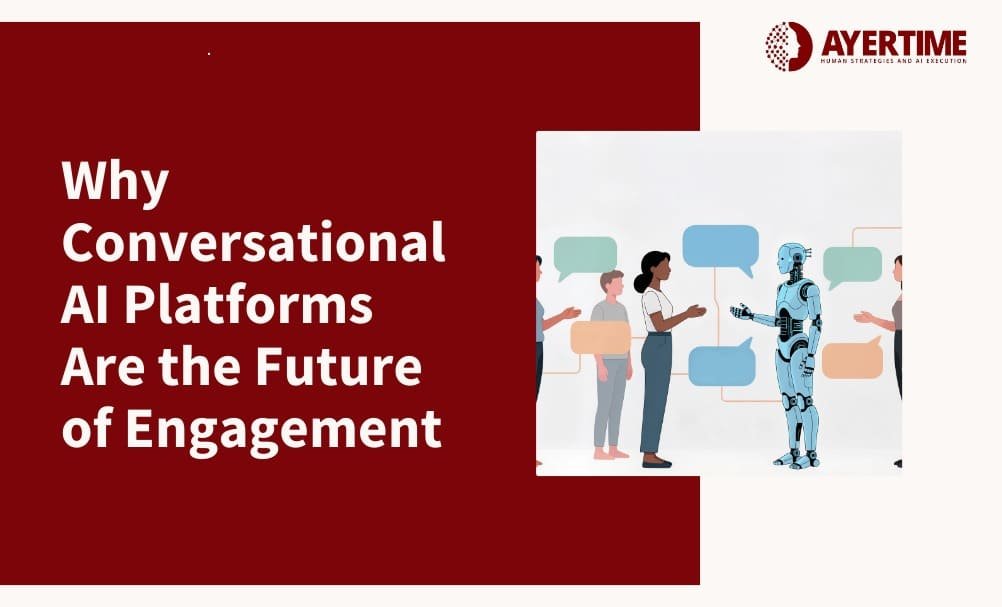
We have all been there. You are thirty minutes into a phone call, listening to distorted jazz music while waiting for a customer service agent. When someone finally answers, you have to repeat your account number, birth date, and the issue you are facing for the third time. It is exhausting, inefficient, and frankly, outdated.
Now, consider the alternative. You visit a website, type a question into a chat window, and receive an instant, accurate response. The assistant knows your order history, suggests a solution based on your previous preferences, and resolves your issue in seconds. This isn’t magic; it is the power of conversational AI platforms.
Conversational AI platforms are systems that simulate human conversation using technologies like Natural Language Processing (NLP) and machine learning. Unlike the rigid, script-based chatbots of the past that broke down if you didn’t use the exact right keyword, these modern platforms understand context, intent, and nuance. They have evolved from simple digital gatekeepers into complex, context-aware assistants capable of handling sophisticated interactions.
This evolution matters because consumer expectations have shifted. We live in an on-demand economy where patience is scarce. Customers expect instant gratification and personalized experiences. For businesses, meeting this demand manually is impossible to scale. This post explores why conversational AI platforms are not just a trend, but the new standard for building meaningful, efficient, and scalable customer relationships.
The Shift from Transactional to Conversational
The way humans interact with technology has undergone a massive transformation over the last two decades. We started with “Click and Search,” navigating through endless menus and search bars to find information. Now, we are moving firmly into the era of “Ask and Receive.”
Evolution of Interaction
Early customer service was purely transactional. You had a problem; you opened a ticket or made a call. It was reactive and often slow. Conversational AI platforms change this dynamic by making interactions proactive and fluid. Instead of forcing users to learn how to navigate a website, these platforms allow users to use the interface they already know best: natural language.
Consumer Preference
The statistics back this up. Most consumers now prefer messaging over calling. Texting feels less intrusive and allows users to multitask. A phone call demands 100% of your attention; a chat conversation fits into the gaps of your day. By adopting conversational AI platforms, businesses meet customers in their preferred medium, reducing friction and increasing satisfaction.
The “Always-On” Economy
Perhaps the biggest driver of this shift is the expectation of 24/7 availability. Human support teams need sleep, breaks, and holidays. AI does not. Conversational AI platforms enable an “always-on” strategy, allowing businesses to engage with customers at 2:00 AM just as effectively as at 2:00 PM. This capability prevents the burnout associated with human teams trying to cover round-the-clock shifts while ensuring no customer query goes unanswered.
Key Benefits of Conversational AI Platforms
Implementing these systems isn’t just about keeping up with trends; it drives tangible business results. Here are the primary benefits organizations see when they deploy sophisticated conversational AI platforms.
Hyper-Personalization at Scale
One of the most significant advantages is the ability to personalize interactions for millions of users simultaneously. Traditional FAQs are static; they give the same answer to everyone. Conversational AI analyzes user data in real-time to offer tailored responses.
For example, a retail bot interacting with a returning customer doesn’t just ask “How can I help?” It might say, “Hi Sarah, are you looking for a matching top for the jeans you bought last week?” This level of context makes the customer feel valued and understood, rather than just another ticket number.
Operational Efficiency & Cost Reduction
Customer engagement automation is a massive cost saver. Conversational AI platforms excel at handling Tier 1 support queries—the repetitive, simple questions like “Where is my order?” or “How do I reset my password?” that clog up support queues.
By automating these routine interactions, businesses can significantly reduce their Average Handling Time (AHT). This frees up human agents to focus on complex, high-value issues that require empathy and critical thinking. The ROI here is twofold: lower operational costs and higher job satisfaction for agents who are no longer stuck answering the same three questions all day.
Omnichannel Consistency
Customers don’t stick to one channel. They might start a query on a mobile app, follow up on a desktop, and check for updates via WhatsApp. Top-tier conversational AI platforms integrate seamlessly across these touchpoints. They maintain the context of the conversation, so if a user switches from web chat to social media, the AI remembers exactly where they left off. This creates a cohesive brand experience that disjointed legacy systems simply cannot match.
Real-World Use Cases Driving Engagement
The theoretical benefits are clear, but how does this look in practice? Conversational AI platforms are being deployed across various business functions with impressive results.
Customer Support
This is the most common application. AI agents handle everything from processing returns and tracking orders to troubleshooting technical issues. The difference between a standard chatbot vs. conversational AI becomes obvious here. A standard bot might link you to a policy page; a conversational platform will process the return for you directly within the chat window.
Sales and Lead Generation
AI is becoming a potent sales tool. Acting as a virtual shopping assistant, the platform can guide users through the sales funnel. It asks qualifying questions to understand the customer’s needs and recommends products accordingly. If the lead is high-value or complex, the AI can qualify them and seamlessly schedule a meeting with a human sales representative, ensuring the sales team only spends time on warm leads.
Internal Employee Engagement
It is not just about external customers. HR and IT departments are using conversational AI platforms to support staff. An IT helpdesk bot can instantly unlock accounts or provision software, while an HR bot can answer questions about benefits or leave balances. This reduces internal friction and helps employees get back to work faster.
Overcoming Implementation Challenges
While the technology is powerful, deploying conversational AI platforms comes with challenges that businesses must navigate carefully.
The “Human in the Loop” Approach
AI is not perfect. There will be times when a query is too complex, emotional, or sensitive for a machine to handle effectively. The most successful strategies employ a “human in the loop” approach. The platform must be smart enough to recognize its own limitations and hand off the conversation to a human agent seamlessly, passing along the full transcript so the customer doesn’t have to repeat themselves.
Data Privacy and Trust
When you ask customers to interact with an AI, you are often asking them to share personal data. Ensuring data privacy is paramount. Businesses must choose conversational AI platforms that are compliant with regulations like GDPR and CCPA. Transparency is also key; users should always know they are speaking with an AI and feel confident that their data is secure.
The Future is Chat-First
The future of business communication is becoming very clear. People no longer want to wait on long phone menus or fill out boring contact forms. They want quick, simple, and human-like conversations. This is why conversational AI platforms are becoming essential for modern businesses.
These tools help companies talk to customers anytime, on websites, social media, and messaging apps. They answer questions faster, give personal responses, and support many customers at the same time. What once felt like a “nice extra” is now a must-have to stay competitive.
Businesses that delay using this technology risk looking outdated, just like companies that avoided building websites years ago. Customers expect speed, ease, and convenience, and they expect it now.
If your business still depends only on phone calls or basic forms, it may be time to rethink your customer engagement approach. Ready to modernize how you connect with customers? Consult Ayertime today and see how conversational AI platforms can transform your customer experience.